
It’s the amount of money you have left to pay shareholders, invest in new projects http://rudrila.com/how-to-calculate-sales-tax-on-any-purchase-2/ or equipment, pay off debts, or save for future use. One of the most frequent types of financial statement fraud involves fictitious or premature revenue recognition to enhance earnings. At WorldCom, manual journals were used to inappropriately capitalize expenses as fixed assets, which inflated net income and total assets by $3.8 billion. In another example, HealthSouth Corporation inflated its earnings by $2.8 billion over six years using manual journals in the same way. In retail, a company might recognize revenue for gift card sales only upon redemption, factoring in an estimate for the portion of gift cards that will never be used.

Gross Profit: What Is It and What It Means For Your Business
So NUA doesn’t make sense, given his high level of current income, along with the anticipation that his tax bracket will likely be lower in the future. He just retired from one company with $2,500,000 in his 401(k) plan, of which $500,000 was invested in company stock. Both workers had long careers and contributed to their company’s qualified retirement plan for many years. Let’s look at the journal entries for Printing Plus and post each of those entries to their respective T-accounts.
Accounting Principles and Assumptions Regulating Revenue Recognition

And by allowing them to walk away with the milk after purchasing it, the store has also implicitly approved the contract. Gross income, operating income, and net income are the three most popular ways to measure the profitability of a company, and they’re all related too. The first part of the formula, revenue minus cost of goods sold, is also the formula for gross income. (Check out our simple Retained Earnings on Balance Sheet guide for how to calculate cost of goods sold). As regulatory frameworks tighten and stakeholder expectations rise, companies must proactively address vulnerabilities in their revenue recognition processes.
Ending Retained Earnings = Beginning Retained Earnings + Net Income – Dividends
Theprinciple also requires that any expense not directly related torevenues be reported in an appropriate manner. For example, assumethat a company paid $6,000 in annual real estate taxes. Theprinciple has determined that costs cannot effectively be allocatedbased on an individual month’s sales; instead, it treats theexpense as a period cost. In this case, it is going to record 1/12of the annual expense as a monthly period cost. Overall, the“matching” of expenses to revenues projects a more accuraterepresentation of company financials. When this matching is notpossible, then the expenses will be treated as period costs.
- Income recognition determines the period in which revenue should be recognized, ensuring that financial statements reflect true profitability.
- This approach aligns with the matching principle, ensuring that revenues are matched with the expenses incurred to generate them within the same reporting period.
- In accordance with accrual accounting reporting standards, the net income metric is the revenue left over once all operating and non-operating costs have been accounted for.
- In the realm of finance and accounting, the concept of unrealized gains presents a nuanced challenge for income recognition.
D. Allocating the Transaction Price to Performance Obligations
If the company determines that a portion of all of the issued gift cards will never be used, they may write this off to income. In some states, if a gift card remains unused, in part or in full, the unused portion of the card is transferred to the state government. It is considered unclaimed property for the customer, meaning that the company cannot keep these funds as revenue because, in this case, they have reverted to the state government. It incurs net income recognition always increases: $350,000 in total expenses, including payroll, operating costs, interest, and taxes. The periodicity assumptionallows the life of a company to be divided into artificial time periods to provide timely information.
Free resources for small businesses:
From the perspective of an auditor, GAAP serves as a benchmark for evaluating the fairness and accuracy of revenue reported by a company. To illustrate, let’s consider a tech company that sells a one-year software license. The revenue from this sale should be recognized over the course of the year as the service is provided, not at the point of sale. This approach aligns revenue with the period in which the costs of providing the service are incurred, giving a more accurate picture of financial performance. Diverse contracts, nuanced obligations, and evolving standards, such as the new revenue recognition standard vs. the old, can complicate adherence.

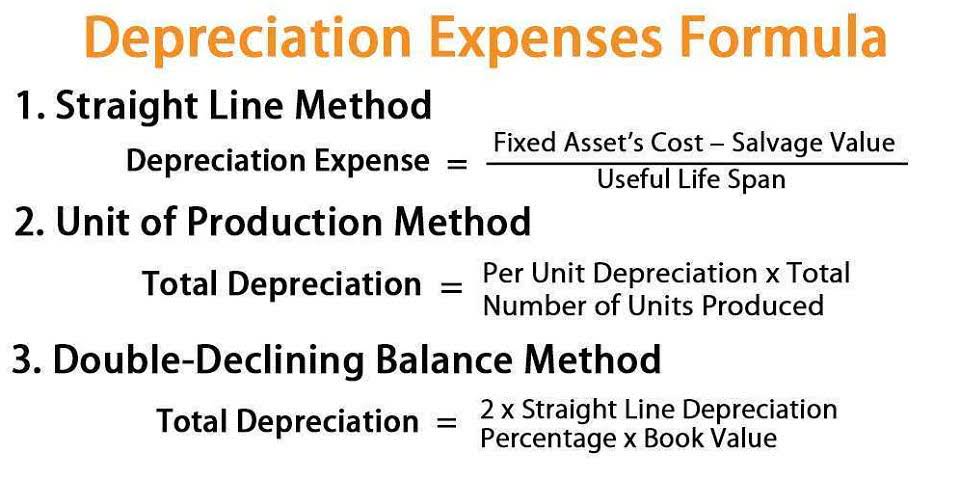
The parent and its subsidiaries are separate legal entities but one accounting entity. Tangible assets like trucks are always depreciated on some sort of a regular basis because they wear out. Here we decide to amortize 1/5th of the cost every year, so one year after buying the truck, we depreciate it by $40,000. That means recognizing $40,000 of expense with a debit to the depreciation expense account. Here is a second example of expense recognition, this one involving inventory. This is a product cost, so you recognize the expense at the time of a sale.
While non-GAAP earnings can offer valuable insights into a company’s operational efficiency and future potential, they must be weighed against GAAP earnings to get a full picture of financial health. Investors should approach these narratives with a critical eye, recognizing the potential for both insight and obfuscation. By considering multiple perspectives and maintaining a healthy skepticism, stakeholders can make more informed decisions that reflect the true value and performance of a company. To illustrate, let’s consider a tech company that incurs substantial stock-based compensation expenses. While these are real costs, they don’t involve cash outflow, and some argue they distort the true economic performance of the company. By excluding these expenses, the Non-GAAP Net Income could provide a better reflection of the company’s cash-generating ability.
The accounting profession and the Securities and Exchange Commission advocate that companies adopt a fiscal year that corresponds to their natural business year. A natural business year is the 12-month period that ends when the business activities of a company reach their lowest point in the annual cycle. For example, many retailers, Wal-Mart for example, have adopted a fiscal year ending on January 31. Business activity in January generally is quite slow following the very busy Christmas period.
